Can You Get Laser Hair Removal While Pregnant?
For many women, finding out they're pregnant triggers an internal countdown to the big day. Suddenly, there’s a growing list of things that must be accomplished in the next nine months, from setting up the nursery to baby-proofing the house. But wanting to take care of some more personal matters is totally normal, too. After all, you might not have time for cosmetic procedures after the baby comes! So, can you get laser hair removal while pregnant? Join us for all the answers.
Is laser hair removal safe while pregnant?
Most estheticians and healthcare providers advise against laser hair removal, electrolysis, and other semi-permanent depilatory methods while pregnant. Here’s why:
Lack of safety data
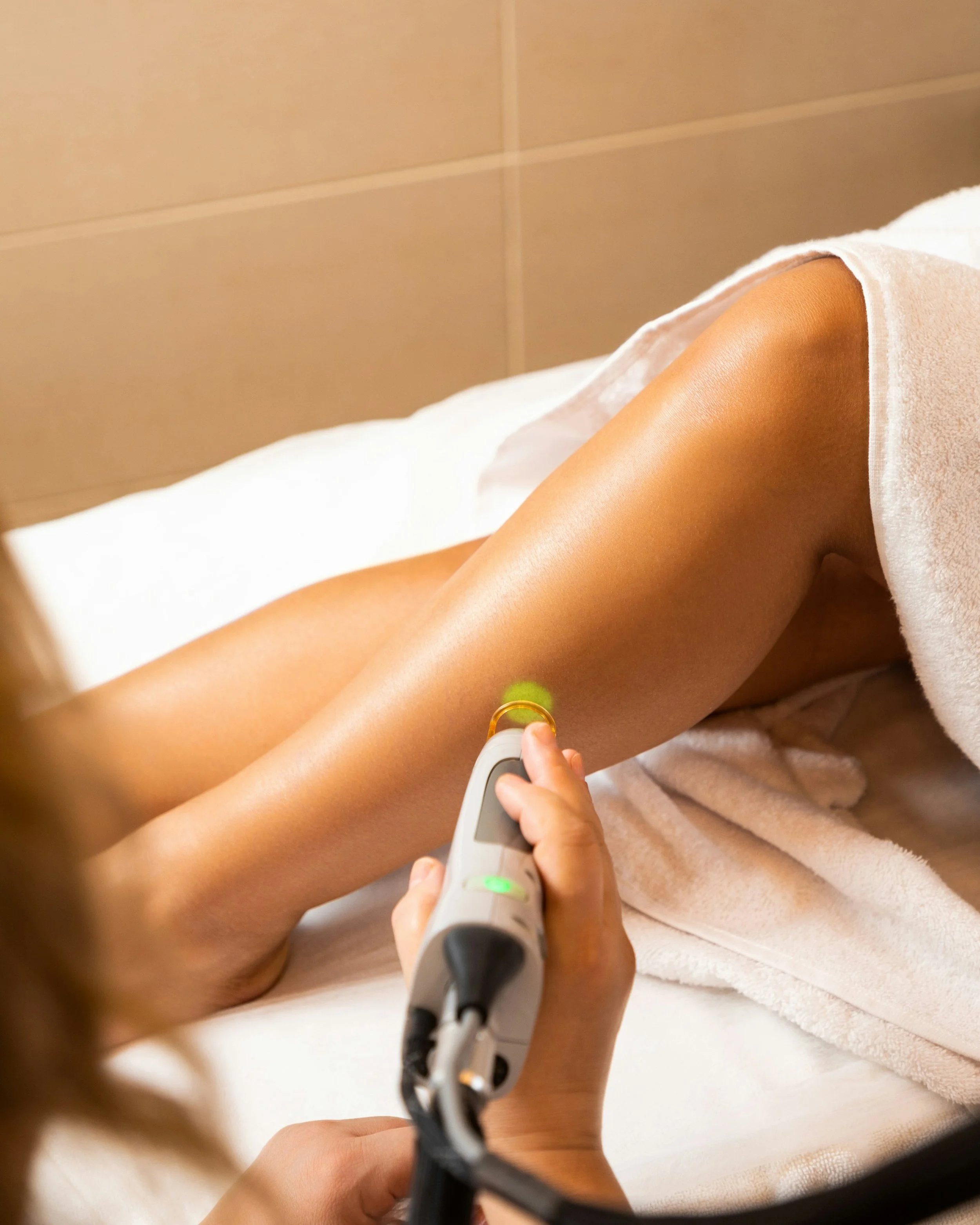
The vast majority of clinical studies exclude pregnant women from participating for fear of dangerous side effects for the subject or her pregnancy. While it’s true that laser therapy targets pigment in the hair follicle and does not penetrate deep enough to reach a growing embryo, the lack of definitive research means these treatments could pose unknown safety hazards.
Increased skin sensitivity
Hormonal changes during pregnancy can dramatically increase skin sensitivity and drive up the risks of adverse effects, including:
Discomfort during treatment
Redness and irritation
Swelling
Skin discoloration
Vascular lesions
Unpredictable results
It’s impossible to know how your body will respond to pregnancy. Constant hormonal changes from one trimester to the next play a major role in hair growth cycles and patterns. Because of this constant fluctuation, some postpartum people find they require additional sessions beyond their initial treatment series. It’s best to wait until hormones have stabilized to move forward with laser hair removal.
How does pregnancy affect hair growth?
While you can technically get laser hair removal while pregnant if you find a provider who’s willing to take the risk, most people choose to wait once they understand how pregnancy influences hair growth.
Hair grows denser and thicker
During pregnancy, estrogen levels rise, causing hair to become thicker and more voluminous. Although this can help laser devices seek out and destroy follicles more efficiently, there’s a catch.
All that extra hair won’t stick around forever.
After giving birth, estrogen levels balance out, and hair growth returns to normal. If you choose to get laser hair removal while pregnant, you’ll be treating more active hairs than necessary and enduring more discomfort than needed to achieve the best long-term results.
Hair growth cycle stays in anagen phase
During pregnancy, each hair remains in the anagen, or active, growth phase for a longer period of time. As a result, many women experience a surge in hair growth. Since strands shed much more slowly, each treatment area contains more active strands than usual.
Understanding telogen effluvium
There’s another downside to all that lush, luxurious hair growth. In the months after childbirth, estrogen levels plummet, and many of those hairs that spent extra time in the anagen growth phase begin to shed – often simultaneously. This process typically peaks between three and six months postpartum, with most people seeing improvement within 6 to 12 months of giving birth.
What are some safe alternatives to laser hair removal while pregnant?
If you can’t get laser hair removal while pregnant, what can you do about unwanted body hair? Here are three options to consider:
Shaving
Many people rely on shaving for cheap, convenient hair removal, but this technique becomes increasingly risky as a pregnancy develops. Attempting to shave your lower body when you can’t see past your belly is dangerous enough. When you factor in slippery showers, it becomes a significant health and safety concern. We suggest avoiding potential disaster – and ingrown hair – by choosing a safer hair removal method.
Waxing
Professional waxing and sugaring treatments are an excellent solution for hair removal during pregnancy. These modalities remove the entire hair from root to tip, forcing each strand to regenerate completely for silky skin that lasts for weeks after each session. When it returns, it’s often thinner and finer than the stubble you get from shaving.
It’s important to note that enhanced sensitivity can make waxing a little more uncomfortable than usual. However, it’s generally tolerable.
Threading
Threading is the ultimate way to achieve perfectly sculpted brows, whether you’re pregnant, postpartum, or happily child-free. Mapping eliminates any guesswork and enables your threading artist to create a blueprint of the perfect eyebrow position, shape, and thickness for your unique face using proven mathematical principles. Then, the threading process removes unwanted strands to sculpt your ideal brow.
Looking for more info? Get in touch with the team at Reflection Spa & Brow Art
Pregnancy isn’t the right time for laser hair removal, but it’s a great way to treat yourself once the ride is over. In the meantime, consider regular waxing, sugaring, or threading appointments to maintain silky-smooth skin. Explore your options today at Reflection Spa & Brow Art!